


2026 Top Reclining Loveseat Buying Guide for Global Buyers

Choosing the right reclining loveseat in 2026 requires more than comparing colors and prices. Global buyers must consider comfort, construction, room dimensions, electrical systems, delivery conditions, and after-sales support. A model that feels excellent in a showroom may become uncomfortable after several hours. Small details matter, including seat depth, lumbar support, footrest alignment, motor noise, and the space needed behind the backrest.

This guide examines reclining loveseat options through practical buying criteria used by furniture professionals and experienced home users. It explains how to check frame materials, foam density, upholstery durability, reclining mechanisms, USB features, and warranty terms. Buyers should also verify voltage compatibility, plug types, packaging strength, import costs, and regional safety requirements before ordering. Standards and service policies differ between countries.

Comfort is personal.

A firm cushion may support one buyer and disappoint another. Genuine leather can age beautifully, but it needs care and may exceed a limited budget. Fabric can feel warmer, yet stains may appear quickly in busy homes. No guide can remove every uncertainty. Even product specifications sometimes leave important questions unanswered. That is why this 2026 buying guide encourages careful measurement, verified reviews, clear supplier communication, and realistic expectations. The goal is not to recommend one universal model, but to help global buyers select a reliable reclining loveseat for their space, habits, climate, and long-term needs.
2026 Top Reclining Loveseat Buying Guide for Global Buyers

What Is a Reclining Loveseat and How Does It Work?

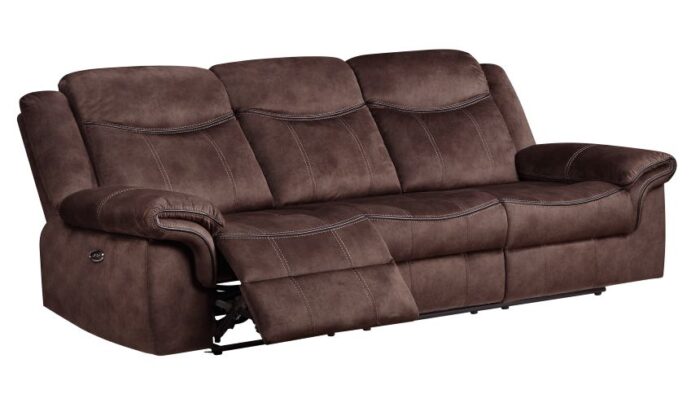
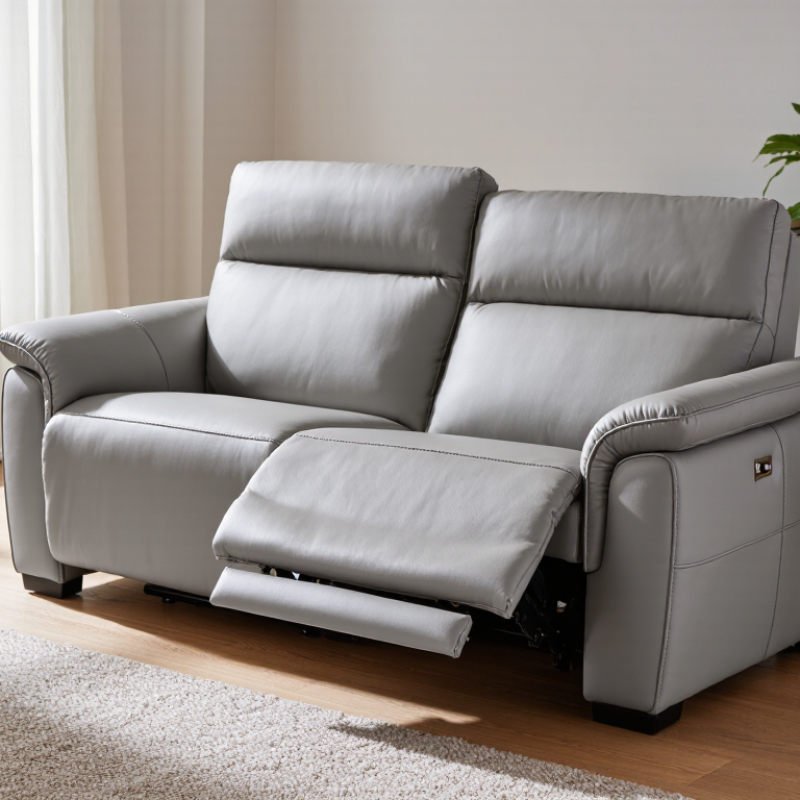
A reclining loveseat is a two-seat sofa with adjustable backrests and extending footrests. It offers shared seating without the size of a full reclining sofa. Each seat may recline independently, so one person can sit upright while the other relaxes.

The mechanism is usually manual or powered. A manual handle releases a spring-assisted footrest, while an electric motor moves the back and leg sections smoothly. Some powered models include USB charging or headrest adjustment. During testing, I check whether the footrest opens evenly and whether the back returns without sudden movement. The frame should remain stable when the user shifts position. The mechanism also needs enough wall clearance, often several inches, but the exact distance varies by design.

Measure the doorway, room depth, and fully extended length before buying. A loveseat that fits upright may block a walkway when reclined. Check the seat width, cushion firmness, and control location, especially for older users or people with limited mobility. Keep fingers away from moving joints, and follow the supplied electrical instructions for powered models. Leather-like coverings can feel cool at first, while woven fabric may offer better breathability. Comfort is subjective. A deeply padded seat may feel luxurious for ten minutes, then provide weak support during longer sitting. That is an easy detail to overlook.

2026 Top Reclining Loveseat Buying Guide for Global Buyers

What Is a Reclining Loveseat and How Does It Work?

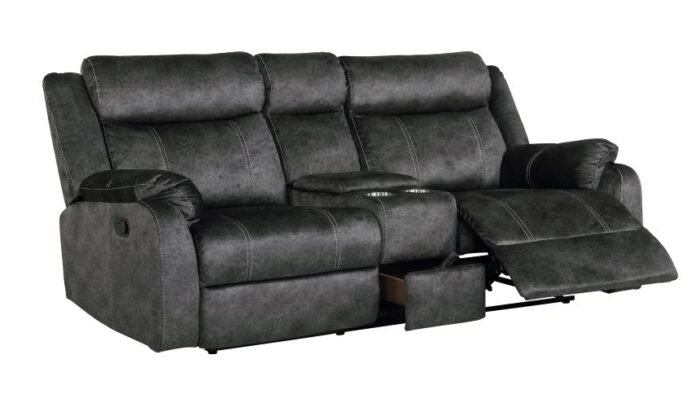
A reclining loveseat is a two-seat sofa with independently or jointly adjustable backrests and footrests. A manual model usually uses a side handle or push-back mechanism, while a power model uses an electric motor and control switch to extend the footrest and lower the backrest. The angles shown are representative comfort positions rather than fixed industry standards; actual settings vary by product design.

Which Reclining Loveseat Types Suit Different Living Spaces?

Choosing a reclining loveseat starts with room behavior, not appearance. In compact apartments, a wall-hugger model saves floor depth. It moves forward while reclining, leaving a narrow gap behind. Measure doorways, elevators, and turning angles before ordering. A manual model suits occasional use and avoids nearby outlets. However, power reclining offers smoother control for older users or people with limited hand strength. This is practical, not universal. Some buyers prefer the firm stop of a lever.

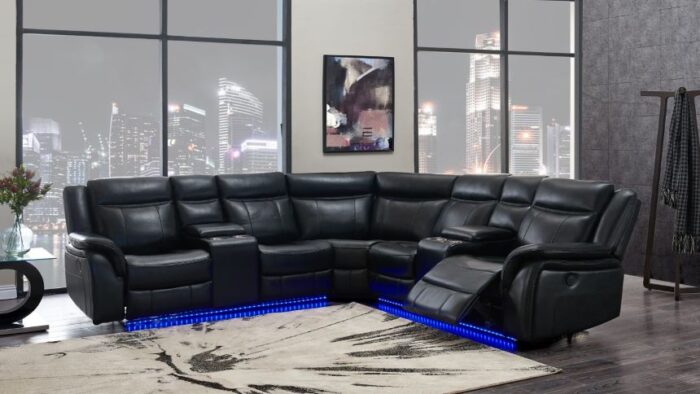
Open-plan living rooms can handle a wider dual-reclining loveseat with a center console. It separates personal seating while keeping conversation easy. In a media room, choose deeper cushioning and head support. Check sightlines when both footrests rise. Corner spaces need careful arm clearance. A wall can block the mechanism. Families may value stain-resistant upholstery, while humid regions need breathable, easy-drying materials. Leather-like surfaces wipe clean, yet they can feel warm in direct sunlight. No fabric wins everywhere.

Tips: Use painter’s tape to mark the loveseat footprint. Sit with feet flat and test the full reclining path. Leave the clearance stated in the product manual. Check voltage requirements for powered models in your country. Ask about delivery access and assembly service. One mistake is trusting showroom space too much. Real homes are less forgiving.

How to Compare Comfort, Materials, Features, and Build Quality

A reclining loveseat should feel supportive before it feels soft. Sit for ten minutes and notice pressure under your thighs. Your lower back should stay supported without forcing your shoulders forward. Check whether both seats fit your body size comfortably. Shorter users may need a tighter footrest angle. Taller users need enough leg extension. Small differences matter.

Leather-like upholstery is easy to wipe, while fabric often feels cooler and less slippery. Look closely at stitching, seam alignment, and cushion recovery. Dense foam usually keeps its shape better than loose, overly soft filling. However, firmness is personal. I once preferred a softer seat, then noticed poor support after an hour. That mistake changed how I compare comfort.

Test the reclining movement several times. Listen for grinding, uneven motion, or sudden stops. Manual mechanisms are simple, but power models offer finer positioning. Check the control location and cable protection. Remote controls should be easy to use in dim light.

A wall-hugger design can save space, but measure the clearance carefully. For global purchases, confirm plug compatibility, electrical standards, packaging strength, and repair support before ordering.

Inspect the frame underneath when possible. Solid joinery, reinforced corners, stable legs, and a quiet mechanism suggest better build quality. Ask for clear warranty terms and replacement-part availability. Marketing photographs cannot show everything.

What Global Buyers Should Know About Sizes, Standards, and Shipping

2026 Top Reclining Loveseat Buying Guide for Global Buyers

A reclining loveseat is not a universal size. Typical models measure 145–185 centimeters wide, but armrests and reclining clearance can add 30–60 centimeters. Measure the doorway, elevator, and final wall position, not only the product. A 2024 furniture ergonomics review from the Human Factors and Ergonomics Society links seat depth and back angle with posture comfort, yet comfort remains highly personal. Test the footrest fully extended. It may collide with a coffee table.

Standards also differ by destination. European buyers should check relevant EN 12520 seating strength and durability requirements. North American buyers should request applicable ASTM test records and electrical documentation for powered models. These references do not replace local compliance checks. Ask for load testing, cycle testing, flame-performance details, and wiring information. Missing documents are a warning sign. A low price cannot repair weak evidence.

Shipping deserves equal attention. UNCTAD’s Review of Maritime Transport 2024 states that ships carry over 80% of global merchandise trade by volume. Reclining loveseats need stronger packaging because motors, hinges, and exposed corners can suffer impact damage. Confirm carton dimensions, gross weight, stacking limits, moisture protection, and replacement-part procedures. Sea freight may reduce cost, but port delays and customs handling can extend delivery. One assumption needs rechecking: “door-to-door” may still exclude inside delivery, assembly, duties, or remote-area fees. Get those points written into the quotation.

2026 Top Reclining Loveseat Buying Guide for Global Buyers - What Global Buyers Should Know About Sizes, Standards, and Shipping

Buying Dimension Specification Typical Data for a Two-Seat Reclining Loveseat What Global Buyers Should Check Practical Reference
Overall Size Overall width Approximately 140–190 cm
(55–75 in)
Measure the intended room, doorway, elevator, staircase, and final installation route. Armrest width and reclining hardware can increase the total width. Two-seat models are commonly wider than a standard two-seat sofa because of separate reclining mechanisms and thicker arms.
Overall Size Overall depth when upright Approximately 90–105 cm
(35–41 in)
Leave enough clearance behind the unit for the selected reclining system. A wall-hugger design normally requires less rear clearance than a conventional recliner. Always use the supplier’s assembled dimensions rather than carton dimensions for room planning.
Overall Size Overall depth when fully reclined Approximately 155–190 cm
(61–75 in)
Keep a clear path in front of the footrests and avoid blocking doors, walkways, heating outlets, or emergency exits. The exact projection varies with seat pitch, footrest design, backrest movement, and wall-hugger construction.
Overall Size Overall height Approximately 100–110 cm
(39–43 in)
Check ceiling height, window lines, shelving, and the height of the delivery route. Removable backs may simplify entry through narrow doors. Back height is often measured from the floor to the highest upholstered point.
Seating Seat width per occupant Approximately 48–60 cm
(19–24 in)
Compare usable seating width, not only the product’s outside width. Center consoles reduce the available width but may add storage and cupholders. Comfort depends on body size, armrest thickness, seat foam, and the shape of the backrest.
Seating Seat height Approximately 47–52 cm
(18.5–20.5 in)
A higher seat can make standing easier for some users, while a lower seat may suit shorter users. Request a dimension drawing before ordering. Seat height is normally measured from the floor to the compressed or uncompressed top of the seat cushion; confirm the supplier’s method.
Seating Recommended user capacity Usually two adults;
commonly 90–150 kg per seat depending on construction
Do not infer load capacity from appearance. Request the tested or declared capacity for each seat and for the frame as a whole. Capacity can vary with the metal mechanism, frame material, motor system, and applicable market requirements.
Reclining System Manual mechanism Lever or pull-handle operation;
no mains power required
Suitable where power access is limited. Check operating force, return action, service parts, and whether the footrest locks securely. Manual units generally avoid electrical compatibility issues but still require safe moving-part design.
Reclining System Powered mechanism One or more electric motors;
hand control or side control
Confirm input voltage, frequency, plug type, adapter or transformer requirements, cable length, standby consumption, and replacement-part availability. Voltage and plug requirements differ by destination market. A local-compliant power supply may be required.
Electrical Safety Common destination-market voltage ranges 100–127 V or 220–240 V AC;
50 or 60 Hz depending on country
Verify the rating label on the motor and power adapter. A plug-shape adapter does not convert voltage or frequency. Electrical requirements must be checked against the destination country and the exact supplied components.
Standards Furniture safety and performance testing Destination-specific requirements;
often includes stability, durability, flammability, and mechanism safety
Ask for current test reports, product scope, test method, sample identity, and report date. A general certificate may not cover the complete loveseat. Requirements differ among jurisdictions; confirm the rules applying to the import country and intended use.
Materials Upholstery options Leather, coated fabric, polyester fabric, microfiber, or blended textiles Request abrasion, colorfastness, cleaning, composition, and restricted-substance information when required by the destination market. “Leather-look” materials may be coated textiles or synthetic leather; confirm the material composition in writing.
Packaging Typical shipping configuration One assembled carton or multiple cartons;
backs and consoles may be packed separately
Request carton count, carton dimensions, gross weight, net weight, pallet details, and whether assembly is required after delivery. Packed dimensions, not product dimensions, determine transport planning and many freight calculations.
Shipping Container planning Volume depends on carton size, nesting, palletization, and loading method Use confirmed packed cubic volume for a container estimate. Do not rely on a generic unit-per-container claim without carton data. A 20-foot or 40-foot container’s usable capacity is lower than its nominal internal volume because of loading gaps and access space.
Shipping Freight cost basis May be calculated by actual weight, volumetric volume, container space, or a combined tariff Request an Incoterms-based quotation that identifies origin charges, ocean or air freight, destination charges, customs clearance, duties, taxes, and final delivery. Freight rates change by route, season, equipment availability, fuel costs, and port conditions.
Trade Terms Common Incoterms for comparison EXW FCA FOB CIF DAP Compare quotations only when the named place and responsibility split are clear. Confirm who handles export clearance, insurance, import clearance, duties, and delivery. Incoterms define selected transport responsibilities and costs; they do not replace the sales contract or determine import taxes.
Delivery Access Minimum access width Often approximately 76–86 cm
(30–34 in), depending on packaging
Measure the narrowest point, including door stops, handrails, turns, stair landings, and elevator doors. Confirm whether the back can be removed. The required clearance is determined by the largest packed or assembled section, not simply by the loveseat’s nominal width.
After-Sales Service and replacement parts Motor, controller, transformer, cable, handle, spring, and mechanism parts may require replacement Clarify warranty duration, coverage by component, labor responsibility, return procedure, spare-parts lead time, and local service arrangements. Powered furniture is easier to maintain when electrical components use clearly identified ratings and standardized connectors.
Order Verification Documents to request before payment Dimension sheet, packing list, commercial invoice, electrical rating, test documents, care instructions, and warranty terms Match the documents to the exact model configuration, upholstery, motor type, voltage, carton count, and destination market. A written specification reduces disputes caused by differences between samples, listings, quotations, and final shipments.

How to Check Safety, Warranty, Installation, and After-Sales Support

A reclining loveseat needs more than soft cushions and a smooth motor. Check the safety file before comparing colors. Ask for the rated load, electrical certification, pinch-point protection, and motor test results. BIFMA seating standards include durability and stability testing, but not every residential product follows the same scope. Request the exact test standard and model number. CPSC’s 2024 furniture tip-over data still reports more than 90,000 emergency-department injuries across furniture and television incidents over recent years. A stable frame matters.

Warranty language deserves careful reading. Confirm separate coverage for the steel frame, reclining mechanism, motor, controller, fabric, labor, and shipping. Some warranties cover parts but exclude service visits. That difference becomes expensive across borders. Ask who pays return freight and how replacement parts are delivered. Installation should include carton dimensions, doorway clearance, floor protection, voltage requirements, and a clear wiring diagram. I measure the elevator, not just the room. That small step prevents a surprisingly common failure.

Tips: Request a video call during installation. Save the serial number and every receipt. Ask for a named service contact and response target. The 2024 NRF and Appriss Retail report estimated U.S. retail returns at 16.9% of sales, showing why return procedures need written detail. A perfect checklist cannot prevent every problem. Still, photos of damaged packaging, loose cables, or uneven footrests can strengthen a claim and speed after-sales support.

Start typing to see products you are looking for.
Sign in

No account yet?

NewSale
SHARE YOUR CART