How to Choose a Dehumidifier Controller in 2026?
Choosing the right Dehumidifier Controller in 2026 requires more than comparing prices or reading humidity ranges. A reliable controller should work with your equipment, room conditions, and daily operating habits. It should measure relative humidity accurately, respond steadily, and avoid constant compressor cycling. Small details matter. A sensor mounted beside a cold supply vent may report misleadingly low readings. A controller installed near a shower may react too slowly.
Building-science expert Dr. Joseph Lstiburek often stresses, “Water is the building’s worst enemy.” That principle remains practical when selecting humidity controls. A Dehumidifier Controller should help prevent condensation, musty odors, material damage, and uncomfortable indoor air. Look for adjustable setpoints, sensor calibration, differential control, relay compatibility, and a clear display. Data logging can reveal nighttime humidity spikes that a quick inspection misses. Remote alerts may also help in basements, storage rooms, and vacation properties.
However, a controller cannot correct every moisture problem. Poor ventilation, hidden leaks, oversized equipment, or blocked airflow may defeat even an advanced model. This is where many buying guides become too confident. Specifications look precise, but real performance depends on installation and maintenance. An inexpensive controller with a well-placed sensor may outperform a premium unit installed carelessly. Check the manufacturer’s technical documentation, electrical requirements, warranty terms, and replacement-sensor availability. Then match the controller to the room’s actual moisture load, not an imagined perfect environment. A little doubt is useful here. Humidity numbers are only meaningful when the sensor, equipment, and building work together.
What Is a Dehumidifier Controller and How Does It Work?
How to Choose a Dehumidifier Controller in 2026?
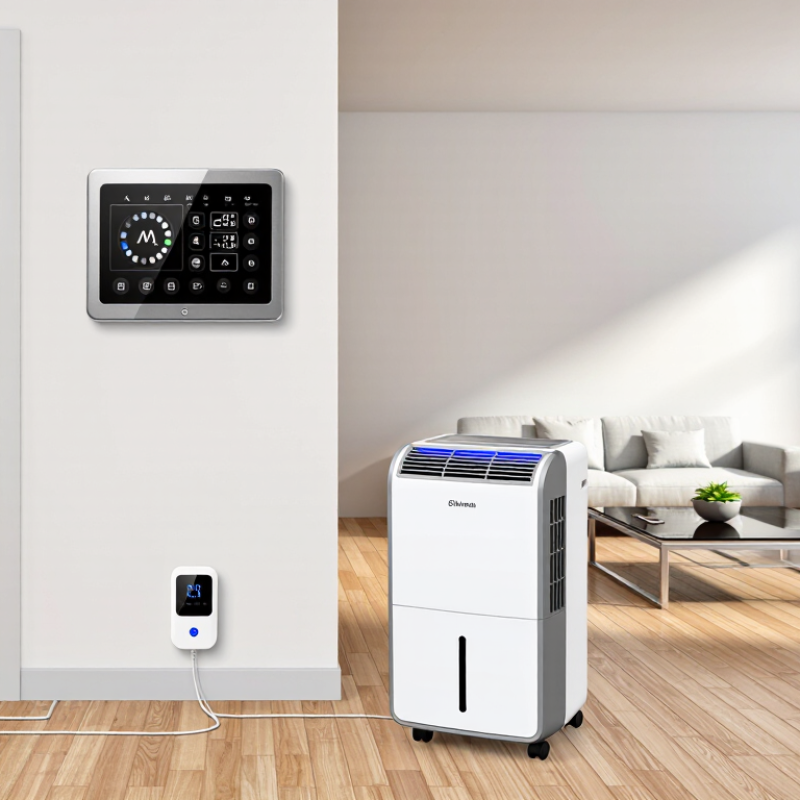
A dehumidifier controller is usually a humidistat with a sensor, display, and switching circuit. It measures relative humidity, then starts the dehumidifier when levels exceed the selected setpoint. The controller stops operation after humidity falls below that target. A small deadband prevents rapid cycling. Many systems also add compressor delays, drainage alarms, temperature readings, and remote monitoring.
The U.S. Environmental Protection Agency recommends maintaining indoor relative humidity between 30% and 50% in most homes. Its Indoor Air Quality guidance links excessive moisture with mold and dust-mite concerns. A controller should therefore support accurate readings near this range, not only show large digital numbers. Look for sensor accuracy, adjustable hysteresis, calibration access, and compatibility with the dehumidifier’s voltage and control terminals. A built-in memory function can also restore settings after a power interruption.
Placement matters greatly. A hallway sensor may read 45% while a basement corner remains damp. I have seen this mismatch cause unnecessary runtime and poor comfort. It is easy to underestimate. In 2026, connected controls may offer useful trend graphs, but more data does not guarantee better control. Choose models with local operation, clear alarms, and a stable fallback mode. The U.S. Department of Energy’s appliance test procedures also show why efficiency depends on operating conditions, not controller claims alone. Test the sensor with a calibrated reference meter before trusting its readings.
How to Match a Controller with Your Dehumidifier and Space?
Choosing a dehumidifier controller in 2026 starts with the room, not the control panel. A basement with cold concrete needs different settings from a warm bathroom or storage room. Measure relative humidity at several times of day. One reading can mislead you.
The U.S. Environmental Protection Agency generally recommends indoor humidity between 30% and 50%. ASHRAE Standard 55 uses a wider comfort range, often near 30% to 60%, depending on temperature and occupants. Match the controller’s sensing range with your target.
Then check the dehumidifier’s capacity. AHAM testing commonly rates units at 80°F and 60% relative humidity, but real rooms may be colder, wetter, or more crowded. A controller cannot fix an undersized machine. That is an easy mistake.
Check compatibility before installation. Confirm the controller’s voltage, relay rating, terminals, and connection method. Portable units may require a compatible external control input, while whole-home systems often accept a dedicated humidistat. Place the sensor away from windows, vents, heaters, and damp corners. The sensor should measure living conditions, not a misleading pocket of air. In practice, a 45% setting may feel right, yet condensation can remain on a cold wall. I would inspect that wall weekly during wet weather. Data helps, but buildings behave imperfectly.
What Sensors, Connectivity, and Safety Functions Matter in 2026?
How to Choose a Dehumidifier Controller in 2026?
A capable controller starts with accurate sensing, not a crowded app. Relative humidity sensing should remain stable near walls, laundry areas, and cool corners. Temperature data helps prevent condensation when surfaces become colder than the room air. Choose a model with adjustable humidity targets and a small deadband. This reduces constant cycling and unnecessary energy use.
Small details matter. A water-level sensor should stop operation before the tank overflows. An external drain sensor can detect a blocked hose. Look for high-temperature protection, compressor delay, fault alerts, and a manual override. Keep it local. If the internet fails, the controller should still regulate humidity safely. Wireless access is useful for remote checks, but encrypted communication and strong account controls are essential. Bluetooth setup may be convenient in a basement with poor signal.
In practical installations, sensor placement often causes more trouble than the controller itself. A sensor beside an exhaust vent can report misleadingly dry air. Place it around chest height, away from direct airflow and sunlight. I have also seen humidity readings drift after months in dusty rooms, so calibration access matters. Do not trust a single reading. Compare it with a separate reference meter when performance seems unusual. A perfect specification cannot fix poor placement, weak drainage, or neglected cleaning. Some advanced systems offer extra sensors, but more data can create confusion without clear alerts and sensible thresholds.
How to Compare Installation, Maintenance, Energy Use, and Cost?
How to Choose a Dehumidifier Controller in 2026?
Choosing a dehumidifier controller starts with installation, not the advertised price. Check whether it matches your unit’s voltage, sensor type, and control method. A clear wiring diagram can prevent expensive mistakes. Measure the installation space first. Some controllers need a protected wall position away from direct airflow. Keep it accessible. An experienced installer should also verify grounding and local electrical requirements before testing the system.
Maintenance affects reliability over several years. Look for removable sensors, washable filters, and simple diagnostic displays. Dust near a sensor can create false readings. That means longer operation and higher energy use. Clean the sensor area every few months, especially in workshops or laundry rooms. Record humidity readings during different seasons. Real conditions often differ from the manual.
Energy comparison requires more than checking standby power. A controller with scheduling, adjustable humidity limits, and responsive sensors may reduce unnecessary runtime. However, advanced features do not always produce savings in every building. Room size, insulation, door openings, and climate matter. Compare the controller’s purchase price, installation labor, maintenance effort, and possible replacement parts. Cheap controls can become expensive. I would also question unclear energy claims. Independent testing data is more useful than impressive wording. Choose a design that is understandable, serviceable, and supported by dependable technical documentation.
How to Choose a Dehumidifier Controller in 2026? - How to Compare Installation, Maintenance, Energy Use, and Cost?
| Controller Type | Typical Application | Installation Time | Typical Installed Cost (USD) | Maintenance Requirement | Controller Power Use | Potential Dehumidifier Runtime Reduction | Expected Service Life | Main Advantages | Main Limitations |
| Built-in Mechanical Humidistat | Small rooms, basements, garages, and portable units | No additional installation
or up to 30 minutes for replacement | $0–$80 | Clean sensor and air filter every 1–3 months | Usually below 1 W | 0–5% compared with manual operation | 5–10 years | Lowest purchase cost; simple controls; no separate wiring | Limited accuracy; usually no remote monitoring or alarm output |
| Standalone Wired Humidistat | Central dehumidifiers, finished basements, and whole-home systems | 1–2 hours | $180–$450 | Verify calibration annually; clean sensor opening and terminals | Typically below 2 W | 5–12% with correct humidity set points | 8–12 years | Stable control; dependable connection; suitable for automatic operation | Requires cable routing and professional installation in some locations |
| Wireless Smart Humidistat | Homes requiring mobile alerts, schedules, and remote adjustment | 1–2 hours | $220–$600 | Replace batteries every 12–24 months; update software; check calibration annually | 1–3 W; battery use may apply | 5–15% when schedules and alerts are used correctly | 5–10 years | Remote access; humidity history; high- or low-humidity notifications | Higher cost; depends on batteries, wireless coverage, and software support |
| Duct-Mounted Electronic Controller | Whole-home HVAC systems and concealed ducted dehumidifiers | 2–4 hours | $350–$900 | Inspect sensor and wiring annually; recalibrate every 1–3 years if required | Usually below 2 W | 5–15% compared with continuous or poorly controlled operation | 10–15 years | Neat installation; accurate sensing; supports interlocking with HVAC equipment | More complex installation; sensor location affects measurement accuracy |
| Commercial Digital Controller | Storage areas, archives, workshops, grow rooms, and light commercial spaces | 3–6 hours | $700–$2,000 | Quarterly sensor inspection; annual calibration; inspect relays and control panels | 2–8 W | 10–20% with staged control and accurate set points | 10–15 years | Wide humidity range; alarm contacts; data logging; multi-unit control | Highest upfront cost; requires qualified commissioning and periodic calibration |
Comparison assumptions: Costs are typical U.S. installed ranges for 2026 and may vary with labor rates, wiring distance, access conditions, and system compatibility. Runtime-reduction figures are practical estimates compared with manual, continuous, or poorly adjusted operation; they are not guaranteed energy savings. A commonly recommended indoor relative-humidity target is approximately 30%–50%, adjusted for climate, comfort, and building materials. The controller's own electricity use is small compared with the dehumidifier compressor and fan.