


How to Choose the Best Teardrop Banners?

Choosing the right Teardrop Banners starts with more than comparing colorful designs online. The best option must match your location, audience, display period, and practical handling needs. A banner beside a windy roadside needs different support from one placed inside a quiet trade show. Small details matter. Check the printed dimensions, fabric quality, stitching, pole structure, and base compatibility before making a decision.

A professional selection process also considers visibility. Your message should remain readable from several meters away, even when people are walking past quickly. Use strong contrast, a simple logo, and limited wording. Review the manufacturer’s specifications carefully, especially fabric weight, weather suitability, water resistance, and recommended wind conditions. A heavy-duty ground spike may work well outdoors, while a cross base with a water bag offers more stability on hard floors. Safety should remain part of the design, not an afterthought.

I have seen attractive banners fail because their bases were too light. That mistake is easy to overlook. It deserves attention. This guide compares important features, including size, portability, printing methods, durability, maintenance, and total cost. It also explains where different Teardrop Banners perform best, from sports events to retail entrances and exhibitions. No single banner suits every situation. Your first choice may not be perfect, especially if conditions change. However, careful measurements, clear supplier communication, and realistic expectations can reduce wasted money and improve your display’s professional appearance. Practical evidence matters more than impressive promises.
How to Choose the Best Teardrop Banners?

Understanding Teardrop Banner Design and Structure

How to Choose the Best Teardrop Banners?

Understanding Teardrop Banner Design and Structure

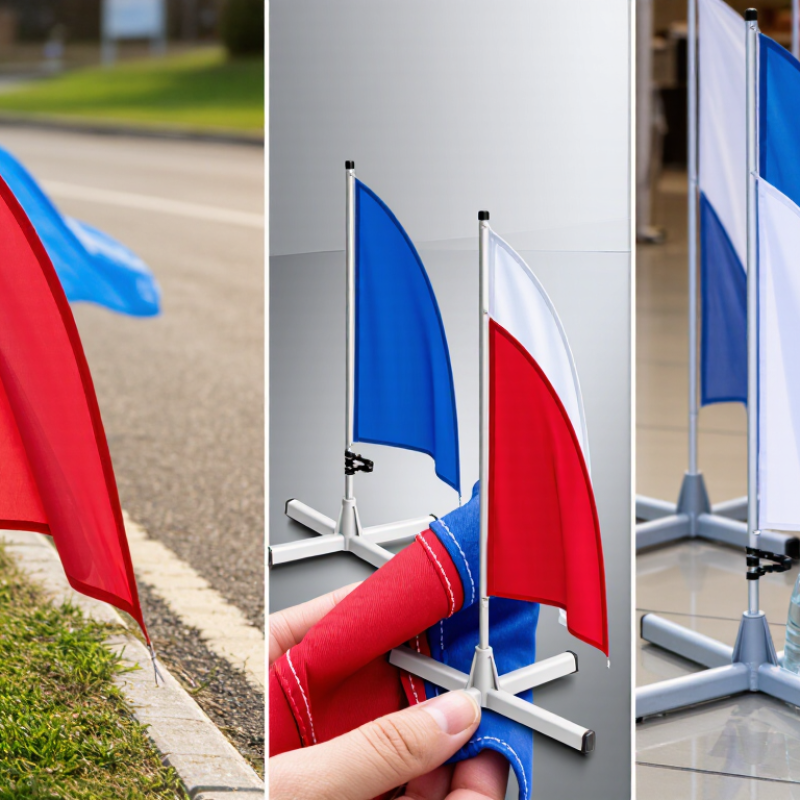
A teardrop banner combines a curved flag, a flexible pole, and a weighted base. Its shape stays recognizable because the pole supports the fabric from top to bottom. The fabric should fit the pole closely without creating sharp wrinkles. Shape matters. During event setup, I check whether the sleeve slides smoothly over the frame. A tight sleeve can distort the print, while a loose sleeve may flap excessively.

The pole material affects stability, portability, and long-term use. Fiberglass bends well and handles repeated assembly, but poor joints can weaken quickly. Aluminum feels sturdier, although it may add weight to transport. The base deserves equal attention. A cross base works on firm indoor floors, while a water-fill base offers better support outdoors. Always inspect the connection between the pole and base. Small gaps can cause unwanted movement.

Print quality depends on fabric tension, ink control, and finishing details. Dye-sublimated fabric usually provides vivid color through the material, not only on its surface. A reinforced edge can reduce stretching around the sleeve opening. I once selected a banner with attractive graphics but overlooked its narrow base. It looked fine indoors and felt unstable near a doorway. That mistake still shapes my buying checklist: measure the display area, confirm the assembled height, and ask for material and hardware specifications before ordering.

Identifying Your Display Goals and Suitable Banner Size

How to Choose the Best Teardrop Banners?

Your display goal should determine the banner size, not the other way around. A roadside banner needs strong visibility from a distance. A booth banner may need to guide visitors through a crowded aisle. For an entrance, a medium teardrop banner often creates direction without blocking nearby signs. For a photo area, a wider format may provide better framing and repeated exposure.

The Outdoor Advertising Association of America reports that out-of-home media reaches about 80% of adults weekly. This supports investing in clear, readable outdoor displays. Yet visibility alone is not enough. Measure the expected viewing distance, then limit the message to one short headline and one action. A large banner with tiny text still fails.

EventTrack research found that 74% of consumers are more likely to buy after engaging with a branded experience. Size should support that experience. A small indoor banner is easier to carry and reposition. A larger outdoor model may remain visible beside parked cars or moving foot traffic. Wind, flooring, transport space, and setup time also matter. These details are easy to ignore.

My own planning bias would favor a larger banner too quickly. That is not always wise. Oversized hardware can create awkward gaps and extra handling. Test the banner from the farthest visitor position before ordering. A printed mockup may look acceptable on a screen, but real lighting can expose weak contrast.

How to Choose the Best Teardrop Banners?

Match the banner height to your display goal, viewing distance, and available space. Larger banners improve visibility in open areas, while compact sizes are easier to transport and use indoors.

Recommended approach: Choose a 2.3 m banner for compact indoor displays, a 3.0 m banner for general exhibitions and entrances, and a 4.0 m banner for outdoor events or locations where visibility from a distance is the priority.

Comparing Materials, Printing Quality, and Base Options

How to Choose the Best Teardrop Banners?

Comparing Materials, Printing Quality, and Base Options

When I inspect teardrop banners, I start with the fabric, not the artwork. Polyester is common because it is light, flexible, and suitable for repeated setup. Knitted fabric often produces sharper details than loosely woven cloth. It also handles curved tension better. A heavier material may look richer, but it can slow drying after rain. I once chose a thick fabric for outdoor use and underestimated its packed size.

Printing quality depends on more than bright colors. Dye-sublimation printing pushes ink into the fibers, helping graphics remain visible on both sides. Ask for a close-up sample before ordering. Small text should have clean edges, and skin tones should not appear gray or overly orange. Check the reverse side, too. Some designs look excellent from three meters away but lose detail up close. That matters at trade counters and busy entrances.

The base should match the surface and expected weather. A cross base works well on flat indoor floors, especially with a weighted plate. A water-fill base offers better stability outdoors, but it needs space and careful handling. Ground stakes suit grass or soft soil, not concrete or hard paving. Wind can change the decision quickly. I prefer testing the assembled banner in its real location for several hours, because product descriptions cannot show every wobble, crease, or awkward carry.

Evaluating Indoor and Outdoor Performance Requirements

How to Choose the Best Teardrop Banners?

Choosing the best teardrop banner starts with its actual display environment. Indoor events usually need a compact base, clean graphics, and stable positioning. On polished floors, rubber feet can prevent sliding and reduce scratches. Low indoor lighting also affects fabric color and readability. Test the banner from several viewing distances. Bright overhead lights may create glare on coated material. That detail is easy to miss.

Outdoor performance demands more than a tall flag and attractive artwork. Wind load should guide the base choice. A ground stake may work on firm soil, while pavement requires weighted support. Water-resistant fabric helps during light rain, but it is not a guarantee against heavy weather. UV exposure can gradually fade dark colors. Look for reinforced stitching, a flexible pole, and a base suited to the surface. During field setups, I check pole tension after every relocation. Small looseness can distort the banner.

Material claims deserve careful reading. Ask for test methods, fabric weight, and care instructions. Wind ratings can be useful, yet they depend on installation and surrounding buildings. Those numbers should never replace judgment. I once underestimated a sheltered courtyard; sudden gusts still twisted the graphic. That mistake changed my checklist. Choose a size that remains readable, portable, and manageable for the people installing it. Performance is practical, not simply visual.

Selecting the Best Teardrop Banner for Your Budget

How to Choose the Best Teardrop Banners?
Selecting the Best Teardrop Banner for Your Budget

A sensible budget covers more than the printed flag. Compare the pole, ground base, carry bag, printing, and delivery as one complete cost. A low starting price can look attractive, but a flimsy base may wobble on a paved walkway. That matters. Ask what materials are included and whether the banner is single- or double-sided. Double-sided printing can improve visibility from different angles, but it may add weight and expense.

Match the banner to its actual setting. For a one-day indoor event, a basic fabric and lightweight base may be enough. Outdoor use calls for a sturdier base suited to the surface, plus fabric made for repeated handling. Check replacement-part availability and care instructions before ordering; replacing a pole or flag later can affect the total cost. Request a clear proof and confirm the finished dimensions, since a small layout mistake can make text hard to read from a few steps away. Not just price. I would compare two or three itemized quotes, then weigh durability against how often the banner will be used. I still find this part easy to underestimate: storage and transport matter when the banner travels between events.

How to Choose the Best Teardrop Banners? - Selecting the Best Teardrop Banner for Your Budget

Budget Level Typical Price Range* Recommended Banner Size Flag Material Base Type Best Use Expected Service Life Weather Suitability Value Rating
Entry US$45–US$85 Approximately 7–8 ft high Lightweight polyester Cross base with optional water bag Indoor events, short-term promotions, occasional use Several months to 1 year with careful storage Calm, dry conditions; not ideal for sustained wind or rain ★★★★☆
Standard US$85–US$160 Approximately 9–11 ft high Dye-sublimated polyester, about 110–130 gsm Ground stake for soft surfaces or cross base for hard surfaces Retail entrances, trade shows, outdoor markets, sports events 1–2 years with moderate use and proper care Suitable for light outdoor use; secure the base in wind ★★★★★
Professional US$160–US$280 Approximately 12–15 ft high Durable polyester, about 115–140 gsm, with reinforced stitching Heavy-duty cross base, water-filled base, or ground stake Frequent campaigns, festivals, dealerships, large outdoor displays 1–3 years depending on exposure and maintenance Good for regular outdoor use; remove during severe weather ★★★★☆
Premium US$280–US$500+ Approximately 16–20 ft high Heavy-duty polyester with reinforced pole pockets and seams Engineered weighted base, water base, or multiple ground stakes High-visibility campaigns, major venues, long-term repeated use 2–4 years with controlled exposure and routine care Best for outdoor visibility, but no fabric banner should remain in severe weather ★★★★☆
Buying Notes: Prices are typical estimated ranges for one complete teardrop banner kit in the United States and may vary by size, printing method, base, quantity, shipping, and customization. Choose a ground stake for grass or soil, and select a weighted or water-filled base for paved surfaces. Do not leave a teardrop banner assembled during storms, strong gusts, or other severe weather.
Start typing to see products you are looking for.
Sign in

No account yet?

NewSale
SHARE YOUR CART