




























10 Tips for Choosing the Best Make Up Pouches

Choosing the right Make Up Pouches is not merely a matter of color or appearance. It affects daily organization, product safety, and travel comfort. A pouch that looks elegant may still have weak stitching, a narrow opening, or a difficult zipper. Small details matter.

Makeup artist and beauty entrepreneur Bobbi Brown once said, “The secret to beauty is simple: be who you are.” Her perspective also applies to makeup storage. Your pouch should match your routine, not an imagined lifestyle. Someone carrying three lip products needs different space from a professional artist carrying palettes, brushes, and skincare bottles. Choosing well begins with honest assessment.

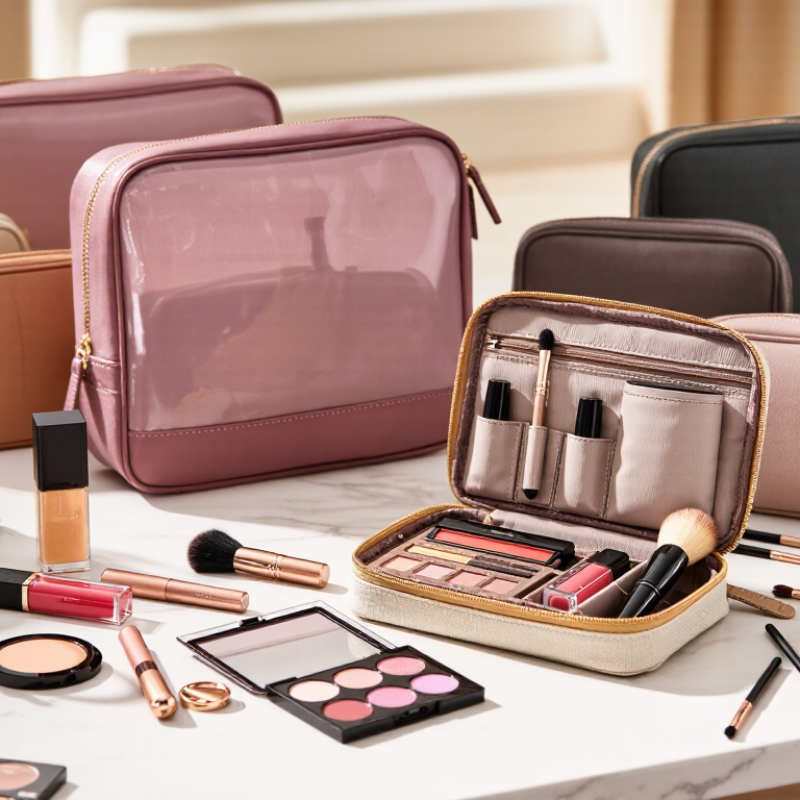
This guide explores 10 practical tips for choosing the best Make Up Pouches. We will examine size, material, compartments, cleaning, closure quality, and portability. A waterproof lining can protect a handbag from foundation spills. A wide opening can make a crowded pouch easier to use. A firm base can stop products from rolling under a hotel bed. It sounds minor. It is not.

Still, no pouch is perfect. Some compartments waste space. Some attractive fabrics stain quickly. I once underestimated zipper quality because the pouch looked polished. That mistake became obvious after repeated use. The best choice balances appearance, durability, capacity, and personal habits. It should feel useful on an ordinary morning, not just impressive in a product photograph. Perhaps convenience deserves more attention than beauty. That is easy to forget.
10 Tips for Choosing the Best Make Up Pouches

Define Your Routine: Let TSA’s 100 mL Rule Guide Travel-Pouch Capacity

When choosing a make up pouch, let your daily routine decide its size. Travel rules should shape that decision, too. The Transportation Security Administration limits each liquid, gel, cream, or paste container to 100 mL or less. These containers should fit inside one clear, quart-sized bag for screening.

Measure your essentials before buying a pouch. A small cleanser, moisturizer, foundation, and mascara may already fill most of the available space. Use travel containers with visible volume markings. Keep the original lids tight, then place them upright when possible. A leakproof inner lining adds protection, especially beside clothing. Clear material also helps you find a product quickly at a crowded security checkpoint.

Do not choose the largest pouch automatically. I once packed extra products “just in case,” and half of them stayed untouched. That wasted space and made inspection slower. Now I separate true liquids from solid products, such as powder blush or a makeup stick. A pouch with one wide compartment is often easier to inspect than several narrow pockets. Still, this approach is not perfect; bulky tools can steal room from necessary liquids. Check current screening guidance before each trip, because procedures and airport practices may change. Your pouch should fit your routine, not an imagined one.

Choose Safe Materials: Compare OEKO-TEX® STANDARD 100 and REACH Criteria

A make-up pouch sits against brushes, creams, and sometimes your skin. Material safety therefore deserves more attention than color or zipper design. OEKO-TEX® STANDARD 100 tests finished textile components for harmful substances. Its criteria cover more than 1,000 chemicals and may exceed legal requirements. Ask for a current certificate, not only a printed symbol. The certificate should cover the pouch fabric, lining, thread, labels, and padding.

REACH is different. It is an European Union chemical regulation, not a finished-product safety certificate. The European Chemicals Agency regularly updates its Candidate List of substances of very high concern. A reliable supplier should explain restricted substances, supplier declarations, and any applicable disclosure duties. Textile Exchange’s Materials Market Report 2024 estimated global fiber production at 124 million tonnes in 2023. That scale makes traceability difficult, especially for coated fabrics and recycled blends.

Check the pouch in your hands. Rub the lining with a clean white cloth. Strong odors, color transfer, or sticky coatings deserve questions. A smooth surface can still hide unsuitable additives. I would request test documents by component and batch. A certificate from last year may not cover today’s material. This is easy to overlook. Also inspect the metal puller and printed decoration, because safety testing often focuses on the main fabric. My own preference is practical, but imperfect: fewer coatings usually make verification easier.

10 Tips for Choosing the Best Make Up Pouches - Choose Safe Materials: Compare OEKO-TEX® STANDARD 100 and REACH Criteria

Tip Material or Feature to Check OEKO-TEX® STANDARD 100 Perspective REACH Perspective Practical Selection Guidance
1Identify the main material Confirm whether the pouch is made from cotton, polyester, polyamide, polyurethane-coated fabric, PVC, or a material blend. Certification applies to tested components and finished products, not automatically to every material from the same supplier. REACH obligations depend on the substances present in the material and the product’s market or supply-chain role. Request a complete material breakdown, including fabric, coating, lining, thread, labels, printing, zipper, and metal parts.
2Ask for valid product evidence Look for a current test report or certificate that clearly identifies the tested product, components, and validity period. Preferred A valid certificate should correspond to the specific finished pouch or defined product group. Verify REACH compliance is normally demonstrated through supplier declarations, test data, and substance information rather than one universal product certificate. Match the document’s product description, color, construction, and supplier information with the actual production sample.
3Check skin-contact suitability Pay special attention to the lining and surfaces that may touch hands, makeup containers, or the face. STANDARD 100 uses product classes based on intended use; products with direct skin contact are assessed more strictly than products with limited contact. REACH restricts or requires information for certain hazardous substances, but it does not create the same product-class system for skin contact. Choose a lining with documented testing and avoid using a certificate for an unrelated textile article as proof for the entire pouch.
4Control dyes and colorants Review dyeing, pigment, and printing processes, especially for dark, bright, or printed designs. Testing can cover harmful substances associated with textile coloration, including certain restricted azo dyes. Some substances, including specified azo colorants in consumer articles, are restricted under REACH when applicable conditions are met. Prefer colorfast materials supported by chemical test documentation, and request separate evidence for printed artwork or logos.
5Evaluate coatings and finishes Inspect water-resistant or wipe-clean coatings such as polyurethane, PVC, acrylic, or other surface treatments. Coatings and finishes may need to be included as separately tested components of the certified product. REACH can restrict substances used in coatings, plasticizers, surface treatments, and other chemical formulations. Ask whether the coating is part of the tested construction and request information about intentionally added plasticizers or other regulated substances.
6Review plastic components Check zipper pulls, transparent windows, piping, backing films, and plastic trims for material type and additives. Plastic parts may be covered when they are included in the tested finished product and its defined components. REACH may impose restrictions or communication duties for substances in plastic articles, including certain phthalates and other substances of concern. Request component-level declarations and avoid assuming that a fabric certificate covers separately sourced plastic accessories.
7Check metal hardware Examine zipper sliders, snaps, eyelets, rings, and decorative hardware for nickel release and restricted metals. Metal components can be assessed for relevant harmful substances when they are part of the submitted product. REACH restrictions may apply to substances released from or contained in metal articles, including certain nickel-release situations for prolonged skin contact. Use corrosion-resistant hardware with supplier test results for the exact finish, plating, and component specification.
8Consider odor and chemical residues Check for strong solvent, plastic, adhesive, or formaldehyde-like odors after unpacking and during normal use. STANDARD 100 includes testing for numerous harmful substances according to the applicable product requirements; odor alone is not a certification test. REACH compliance does not mean that a product will have no odor, and odor is not a complete substitute for chemical testing. Combine sensory inspection with laboratory evidence, particularly for coated fabrics, printed surfaces, adhesives, and freshly manufactured products.
9Confirm manufacturing consistency Verify that bulk production uses the same fabric, dyes, coatings, accessories, and production process as the approved sample. Certification is linked to defined materials and construction; significant changes may require reassessment or updated documentation. REACH duties remain relevant when formulation, supplier, component, or substance content changes. Include material-change notification, incoming inspection, and periodic retesting requirements in the purchase specification.
10Check market-specific requirements Determine the destination market, intended use, packaging requirements, and any retailer or importer specifications. STANDARD 100 is a voluntary textile safety certification and does not replace all legal requirements in every market. REACH is an European Union chemicals regulation; its restrictions and information duties must be evaluated for the relevant supply-chain situation. Use both voluntary certification evidence and applicable legal compliance documentation; keep records for the product’s full supply chain.

Important: OEKO-TEX® STANDARD 100 certification and REACH compliance are not interchangeable. Certification scope, applicable product class, current legal restrictions, supplier documentation, and the final destination market should all be verified before purchase.

Test Durability: Apply ASTM D4966 Martindale Abrasion-Test Methods

When choosing a make up pouch, fabric appearance is only one part of the decision. A pouch may look strong but weaken after repeated contact with brushes, bottles, and zippers. The ASTM D4966 Martindale abrasion-test method offers a practical way to examine this risk. It measures how textile surfaces respond to controlled rubbing under defined pressure and movement.

For a useful test, prepare fabric samples from the pouch body, lining, and pocket areas. Place them in a Martindale abrasion tester, then expose them to repeated rubbing cycles. Record surface fuzzing, color change, thinning, holes, and loose fibers. Check the stitching too. Abrasion can damage seams before the main fabric fails. Short intervals help reveal early wear.

Do not treat one test result as a complete durability guarantee. ASTM D4966 focuses on textile abrasion, not the entire pouch structure. A zipper, coating, or bonded seam may need separate checks. In sample reviews, I also place cosmetics inside and open the pouch repeatedly. This adds realistic stress. One mistake is testing only a flat fabric swatch. Curved corners often wear differently. The method also requires consistent pressure, conditioning, and evaluation criteria. Without those controls, comparisons become unreliable. A higher cycle count is not automatically better if the pouch loses shape or becomes difficult to clean. Practical durability should include appearance, function, and everyday handling.

Plan Organization: Match Compartments to Ten Essential Makeup Categories

A well-designed makeup pouch should reflect your daily routine, not a glamorous product list. I divide mine into ten categories: primer, foundation, concealer, powder, blush, bronzer, highlighter, eye makeup, brow products, and lip products. Each category needs a clear place. Otherwise, small items disappear under larger bottles.

Look for one wide compartment for primer, foundation, and concealer. These products usually stand upright better, especially when their caps collect residue. A flat pocket can hold powder, blush, bronzer, and highlighter without scratching their surfaces. Eye makeup needs narrower loops or sleeves for pencils, palettes, and mascara. Keep brow products beside it. A separate lip pocket prevents colored stains from spreading across brushes or sponges.

Tools deserve attention, too. If your ten categories include applicators, place them in a washable section rather than loose beside creams. I once bought a pouch with beautiful deep sections, but the opening was too narrow. My brushes bent, and I stopped using half the storage. That mistake changed my priorities. Check the zipper, lining, seams, and base before choosing a pouch. Water-resistant fabric helps, but it does not replace regular cleaning. Leave a little empty space for quick access and unexpected items. A crowded pouch looks organized until you need one pencil.

10 Tips for Choosing the Best Makeup Pouches

Plan Organization: Match Compartments to Ten Essential Makeup Categories

This illustrative organization plan assigns 18 total compartments across ten common makeup categories. Complexion and eye products receive more space because they often include multiple items, while brow, remover, backup, and accessory categories can typically share smaller sections. Use the allocation as a planning guide and adjust it to your personal routine.

Verify Sustainability: Require the GRS Minimum of 50% Recycled Content

Choosing a make up pouch requires more than checking its color, zipper, or shape. Verify sustainability claims with evidence. The Global Recycled Standard (GRS) requires at least 50% recycled content for a product to carry a GRS claim. This threshold matters because “eco-friendly” alone proves very little.

Tip 1: Request the supplier’s valid GRS Scope Certificate. Confirm that it covers the factory, product category, and production period.

Tip 2: Ask for a Transaction Certificate for your specific order. A factory’s certificate may not cover every pouch.

Tip 3: Check the stated recycled percentage. Do not accept vague wording such as “made with recycled materials.” Clear documentation builds trust.

Look closely at the material details. Recycled polyester may appear smooth, but its source and percentage still need verification. Ask whether the lining, thread, labels, and coating are included in the recycled-content calculation. They may not be. Request test reports or production records when available. Keep copies with your purchasing files.

A printed sustainability claim can look convincing. It is not proof. I once treated attractive packaging language as enough evidence; that approach needed correction. Suppliers can also misunderstand certification requirements. Use precise questions, written records, and independent verification when the order is important. Small details matter here.

Start typing to see products you are looking for.
Sign in

No account yet?

NewSale
SHARE YOUR CART