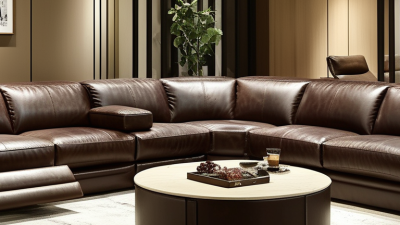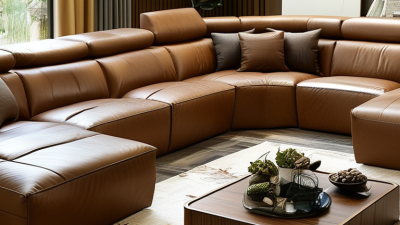


Top Leather Sectional Sofa Suppliers Worldwide

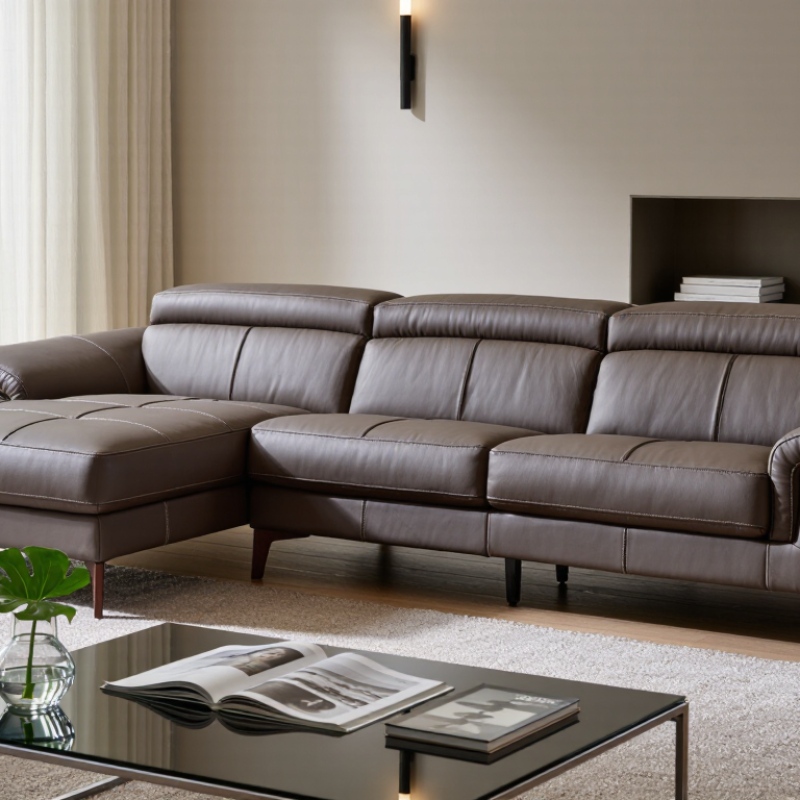
Choosing among the top leather sectional sofa suppliers worldwide requires more than comparing catalog prices. A dependable supplier should demonstrate consistent leather grading, strong frame construction, precise stitching, and transparent warranty terms. These details affect how a sofa feels after five years, not just how it appears in showroom lighting.

Interior-design authority Billy Baldwin offered a useful principle: “Be faithful to your own taste, because nothing you really like is ever out of style.” His words remain relevant when selecting a leather sectional for a home, hotel, or professional lounge. Full-grain leather may develop attractive creases and a deeper patina. Corrected leather can provide a more uniform surface and easier budget control. Neither choice is automatically superior.

The right supplier explains the difference clearly.

A serious evaluation should include hide origin, leather thickness, foam density, suspension systems, modular dimensions, and replacement-part availability. Buyers should also inspect corner joins, zipper quality, cushion recovery, and the sofa’s underside. Small manufacturing shortcuts often become visible near armrests and seat edges.

This guide compares international suppliers through practical criteria, including product quality, customization, production experience, delivery reliability, and customer support. However, supplier rankings are never perfect. A factory may perform exceptionally for one collection and disappoint on another. Regional shipping conditions can also change the final buying experience.

Careful verification matters. Request material samples, factory images, test reports, and written specifications before placing a large order. A beautiful leather sectional should not only photograph well. It should support daily living, repeated cleaning, and changing interior needs.
Top Leather Sectional Sofa Suppliers Worldwide

What Defines a Leading Leather Sectional Sofa Supplier

A leading leather sectional sofa supplier proves quality through repeatable work, not impressive catalog images alone. Experienced teams explain leather grades, grain variation, and expected surface changes before an order is placed. They can show production samples, frame details, stitching close-ups, and measurable foam specifications. Real expertise appears in useful answers. Full-grain leather should feel supple, while corrected leather offers more uniform color and easier maintenance. A responsible supplier explains both strengths and limitations clearly.

Manufacturing discipline also defines a dependable supplier. Look for kiln-dried hardwood frames, reinforced corner blocks, consistent seam spacing, and cushion testing records. Skilled factories inspect leather before cutting, because scars and loose grain can affect finished panels. They should provide clear sample approvals, realistic lead times, protective packaging, and traceable quality checks. These details matter when a sectional must survive daily family use, not just showroom lighting.

Reliability becomes visible after the deposit. A strong supplier responds quickly, documents changes, and assigns one accountable contact. No supplier gets every decision right. A shade may vary slightly, or a cushion may feel firmer than expected. The important question is how the team investigates and corrects the issue. Ask for inspection photos, replacement procedures, and written care guidance. Honest communication often reveals more professionalism than polished sales language. A careful buyer should also reconsider vague claims about “premium” leather without test data or material records.

Major Global Regions for Leather Sectional Sofa Manufacturing

Top Leather Sectional Sofa Suppliers Worldwide

China remains the largest manufacturing hub for leather sectional sofas. CSIL’s World Furniture Outlook 2024 estimates that China produces about 37% of global furniture output. Its advantage comes from integrated supply chains, large upholstery factories, and strong container logistics. Buyers can source frames, foam, leather, and mechanisms within one industrial network. Quality still varies between factories.

Vietnam is gaining attention for export-oriented upholstery production. Its factories often serve overseas markets and focus on labor-intensive cutting, stitching, and assembly. Poland and Turkey also offer strategic access to European and nearby regional buyers. Their locations can reduce delivery distances, although energy and labor costs may affect quotations. Logistics matter more than many catalogs suggest.

Italy remains influential in premium leather furniture manufacturing. Its production model emphasizes material selection, skilled stitching, tailored proportions, and smaller production runs. Eurostat trade statistics consistently show Italy as a significant European furniture exporter. However, “Italian-made” does not automatically mean superior comfort or durability. Buyers should inspect leather thickness, frame joinery, foam density, seam tension, and testing records. The International Organization for Standardization publishes relevant furniture performance standards, but compliance claims require verification. Regional strengths are real, yet supplier audits and physical samples remain necessary. Sectional-specific market data is still limited because many industry reports combine sofas with broader upholstered furniture categories.

Leather Types, Frame Construction, and Sofa Design Categories

Top Leather Sectional Sofa Suppliers Worldwide

Leather selection changes the sofa’s feel, price, and aging pattern. Full-grain leather keeps natural marks and usually develops a deeper patina. Corrected-grain leather offers a more uniform surface but may feel less distinctive. Split leather can reduce cost, although durability depends heavily on its coating. The Leather Working Group notes that responsible tannery assessment covers traceability, chemical management, and environmental performance. That matters when comparing worldwide suppliers. Grand View Research forecasts the global furniture market to grow at approximately 5% annually through 2030. Demand is rising, but quality still varies widely.

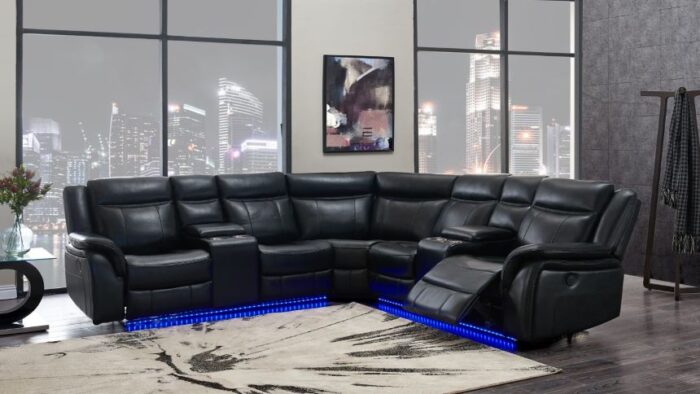
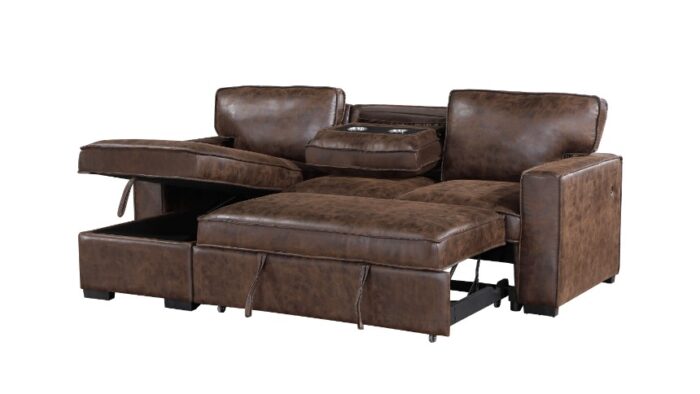
Frame construction deserves closer inspection. Kiln-dried hardwood, reinforced corner blocks, and metal-to-wood fastening provide stronger support. Plywood frames can perform well when layered and properly engineered. Cheap staples alone are a warning sign. Sofa categories also affect construction: L-shaped sectionals suit open living rooms, U-shaped designs create conversation zones, and modular sectionals allow future rearrangement. A 2024 CSIL furniture outlook highlights continuing demand for flexible, space-conscious furniture. I would not assume every modular sofa is equally durable. Connectors often become the weak point.

Tips: Request leather thickness, frame material, foam density, suspension details, and tested load ratings. Sit on the corner seat, not only the center. Check whether cushions recover after pressure. Ask for abrasion testing and care instructions. Small details reveal supplier discipline. Industry reports guide research, but physical samples expose the uncomfortable truth.

How to Evaluate Supplier Quality, Capacity, and Certifications

A reliable leather sectional sofa supplier should prove quality beyond polished photographs. Request full-grain, corrected-grain, or split-leather specifications for every visible panel. Ask for hide thickness, colorfastness results, abrasion testing, and odor-control procedures. Small sample cuts can reveal loose grain, uneven dye, or weak finishing. They often tell the truth.

Inspect the frame closely. Kiln-dried hardwood, reinforced corner blocks, and consistent joint construction usually support long-term stability. Check foam density, suspension systems, seam alignment, and recliner mechanisms when applicable. A factory audit should include random carton inspections, stitching checks, and moisture measurements. Do not accept a perfect sample as proof of perfect production.

Capacity requires more than a large workshop. Review monthly output, active production lines, worker training, and backup suppliers for leather and hardware. Compare confirmed lead times with recent shipping records. Ask how the factory handles seasonal peaks, replacement parts, and quality claims. Certifications can support credibility, but verify their scope, expiration date, and issuing body. Useful evidence may include ISO 9001, fire-safety testing, chemical compliance documents, and responsible sourcing records. Some suppliers present certificates for a different facility. That mistake is easy to miss. A written inspection plan, signed approval samples, and measurable acceptance limits create stronger protection than promises.

Top Leather Sectional Sofa Suppliers Worldwide: How to Evaluate Supplier Quality, Capacity, and Certifications

This non-company-specific evaluation framework assigns a 100-point benchmark to the factors most relevant when comparing leather sectional sofa suppliers. Product quality receives the highest weighting, followed by production capacity and recognized management or sustainability certifications. Buyers should verify test reports, factory capacity, audit records, certification validity, lead times, and quality-control procedures before making a sourcing decision.

Sourcing Process, Pricing Factors, and Buyer Considerations

Sourcing leather sectional sofas requires more than comparing catalog prices. Define seat depth, leather grade, frame material, foam density, dimensions, and carton limits before contacting suppliers. According to Fortune Business Insights, the global furniture market was valued at approximately USD 516.66 billion in 2022 and may reach USD 780.43 billion by 2030. This growth creates choice, but also inconsistent specifications.

Ask suppliers for leather test results, frame-joint photos, foam recovery data, and a pre-production sample. A practical sourcing process should include factory verification, sample approval, inspection standards, and shipment planning. The International Trade Centre recommends using detailed product classifications and trade data when assessing international suppliers. That helps buyers compare actual shipment activity instead of relying only on online claims. Still, trade data can be incomplete.

Price depends on leather thickness, corrected or full-grain finishing, frame construction, foam density, stitching complexity, packaging, and order quantity. Freight also matters. A large sectional may require oversized cartons, increasing warehouse and container costs. Drewry’s World Container Index shows that ocean rates can change sharply during periods of disruption, so a fixed freight assumption is risky.

Buyer evaluation should include warranty scope, replacement-part availability, lead time, moisture protection, and color consistency between production batches. Request landed-cost calculations, not factory quotations alone. A lower price may hide thinner leather or weaker internal supports. The cheapest sample can become the most expensive mistake. Perfect forecasting is impossible. Recheck every assumption before placing the order.

Top Leather Sectional Sofa Suppliers Worldwide - Sourcing Process, Pricing Factors, and Buyer Considerations

Supplier Market / Region Typical Product Strength Indicative FOB Price
Per Sectional (USD)
Typical MOQ Sample Lead Time Bulk Lead Time Common Leather Options Main Buyer Consideration
China Large-scale OEM production, modular designs, extensive customization $550–$1,500 20–100 units 15–30 days 45–90 days Top-grain, corrected-grain, split leather, bonded leather Confirm leather percentage, foam density, frame material, and factory audit results.
Vietnam Export-oriented upholstery, competitive labor costs, wood-frame production $700–$1,800 30–100 units 20–35 days 50–100 days Top-grain, semi-aniline, corrected-grain, leather-match upholstery Check production capacity during peak export seasons and verify timber legality documentation.
Italy Premium craftsmanship, design-led products, advanced leather finishing $2,000–$6,000+ 5–20 units 30–60 days 90–180 days Full-grain, aniline, semi-aniline, premium corrected-grain Higher cost is driven by leather grade, tailoring, construction details, and lower production volume.
Turkey Flexible mid-to-premium production and access to European markets $900–$2,400 10–50 units 20–40 days 60–120 days Top-grain, corrected-grain, semi-aniline, leather-match Compare port logistics, customs requirements, and compliance with the destination market.
Poland and Central Europe Consistent quality, upholstered furniture engineering, EU-compliant production $1,000–$2,800 10–50 units 25–45 days 60–120 days Top-grain, corrected-grain, semi-aniline, leather-match Suitable for buyers prioritizing EU documentation, shorter regional transit, and repeatable specifications.
India Handcrafted designs, genuine leather variety, smaller-batch production $650–$1,700 10–50 units 20–45 days 60–120 days Full-grain, top-grain, corrected-grain, buffalo leather Inspect stitching, moisture control, color consistency, and packaging for long-distance shipping.
Mexico North American supply proximity, leather upholstery, custom residential furniture $800–$2,200 10–50 units 20–40 days 60–120 days Top-grain, corrected-grain, split leather, leather-match Evaluate regional freight advantages, tariff treatment, and consistency across production batches.
Brazil Strong domestic leather supply, substantial upholstery capacity, broad price range $900–$2,500 10–50 units 25–45 days 60–130 days Full-grain, top-grain, corrected-grain, semi-aniline Verify environmental certificates, export experience, and ocean freight schedules.

Sourcing Process and Buyer Evaluation Checklist

Sourcing Stage Key Data to Collect Recommended Buyer Action Important Acceptance Criteria Typical Risk
1. Product Specification Dimensions, seating capacity, leather type, color, configuration, leg material Prepare a technical specification sheet with drawings, tolerance limits, and reference images. All suppliers quote against identical specifications. Different interpretations make supplier quotations impossible to compare.
2. Supplier Screening Years exporting, production capacity, certifications, customer references, factory location Request business licenses, audit reports, production photos, and recent export records. The supplier can demonstrate relevant production and quality-control capability. Trading intermediaries may provide limited control over quality and delivery.
3. Sample Approval Leather swatches, color, stitching, foam firmness, frame construction, dimensions Approve a signed sample or golden sample before bulk production. Sample matches the approved specification and has no visible defects. Bulk goods may differ from the development sample.
4. Commercial Negotiation FOB or EXW price, MOQ, payment terms, tooling, packaging, warranty Compare total landed cost rather than unit price alone. Quotation clearly states inclusions, exclusions, validity, and delivery terms. Low prices can exclude premium leather, export packaging, inspection, or inland freight.
5. Quality Inspection AQL level, defect classification, leather grading, carton condition, function testing Use pre-production, in-process, and pre-shipment inspections for commercial orders. Inspection results are documented and linked to purchase-order requirements. Cosmetic defects, uneven cushions, weak frames, and color variation may be discovered too late.
6. Logistics and Delivery Carton dimensions, container loading plan, HS code, port, transit time, insurance Confirm packaging and loading efficiency before issuing the final purchase order. Goods arrive dry, undamaged, correctly labeled, and within the agreed delivery window. Oversized cartons increase freight cost and damage exposure.
7. After-Sales Management Warranty period, spare parts, claim process, response time, replacement policy Include measurable warranty and claims procedures in the supply agreement. Supplier provides timely remedies and replacement components where applicable. Unclear responsibility can increase returns and service costs.

Major Pricing Factors for Leather Sectional Sofas

Cost Factor Typical Cost Impact What Changes the Price Buyer Verification Method
Leather Grade and Coverage High Full-grain and aniline leather generally cost more than corrected-grain, split leather, bonded leather, or leather-match upholstery. Request a material declaration, leather-area breakdown, and swatch approval.
Sofa Size and Configuration Medium to high Number of seats, chaise length, recliner mechanisms, storage consoles, adjustable headrests, and modular connectors affect material and labor use. Compare quotations using the same engineering drawing and bill of materials.
Frame and Suspension Medium Kiln-dried hardwood, engineered wood, steel reinforcement, sinuous springs, and webbing have different costs and durability profiles. Request construction photos, material specifications, and load-testing information.
Foam and Comfort System Low to medium Foam density, feather or fiber wrapping, seat depth, cushion design, and firmness level influence cost and comfort. Specify foam density and firmness range rather than using only “soft” or “medium.”
Customization and Tooling Medium to high Custom colors, stitching patterns, molds, mechanisms, dimensions, and packaging require additional development work. Separate one-time development charges from recurring unit costs.
Packaging and Shipping Volume Medium Carton size, knock-down design, container utilization, port charges, fuel costs, and destination distance affect landed cost. Request carton measurements, loading quantity, and current freight quotations.

Note: Price ranges are indicative FOB benchmarks for standard leather sectional sofa configurations and can vary by specification, order volume, leather coverage, logistics conditions, certifications, and market timing. Confirm all commercial figures through a current supplier quotation.

Start typing to see products you are looking for.
Sign in

No account yet?

NewSale
SHARE YOUR CART